In Other News

Product index

The pieces, at a glance.

Drag through the edit, then scroll through the argument.

Drag to browse · Click to read
The built-in layer · 04 OF 06Vintage · Double-Layer T-Shirt

$40–$150

The most useful vintage clothes are rarely the rarest ones. They are the pieces that became so familiar we stopped noticing where the shape came from: the four-pocket field jacket, the blue French work coat, the high-rise olive fatigue trouser, and the athletic layers that gave ordinary cotton its personality.

All six have been copied continuously. That is exactly why the originals remain interesting. They were designed before anyone needed to explain the styling. The proportions came from utility, manufacturing, and the way people actually wore them—not from a brand trying to manufacture evidence of authenticity.

This is not a definitive archive. It is a starter kit: six references that are common enough to wear, specific enough to learn, and searchable enough that ION can help you find a good one now.

The jacket everyone copied

The M-65 and the French chore jacket approach utility from opposite directions: one engineered and modular, the other stripped down to cloth, buttons, and pockets.

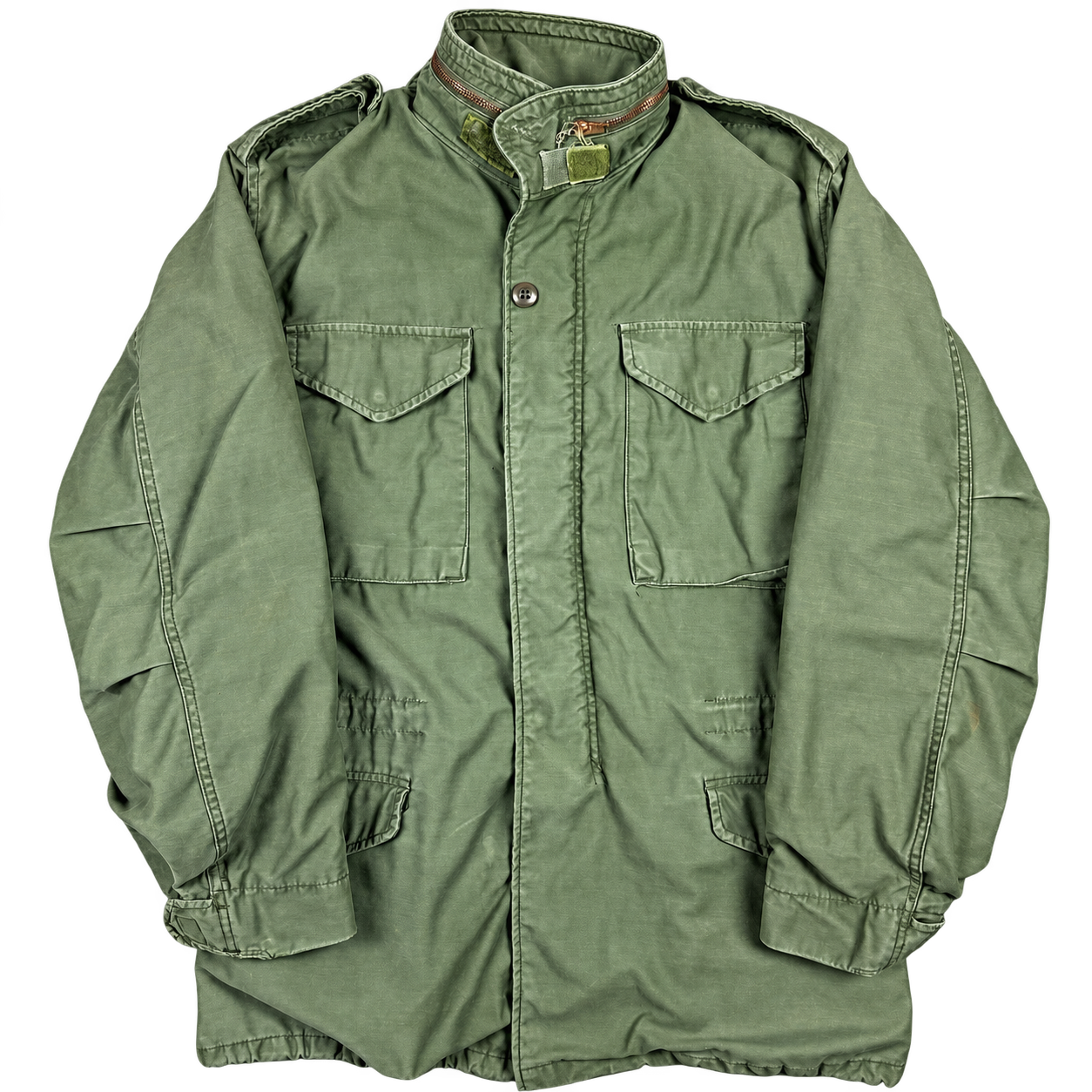
Vintage olive green U.S. Army M-65 field jacketView product + listings →

The permanent field jacket

U.S. Army

M-65 Field Jacket

The M-65 has survived because the design is generous without being shapeless. Four large flap pockets carry the visual weight low on the body, while the stand collar, concealed hood, drawcords, and removable-liner system make the jacket feel engineered rather than decorated. Even empty, it looks prepared for something.

The first thing to check is the label. A real military jacket should give you a pattern, size, contract or specification information, and a clearer story than a seller calling anything olive and pocketed an M-65. Then inspect the zipper, snaps, liner buttons, hood compartment, cuffs, and drawcords. Missing components are not always fatal, but the price should acknowledge them.

Buy by measurements rather than the tagged military size. These were designed to work over layers, and decades of washing can change the relationship between the label and the garment. I like them slightly large, with enough room for the waist drawcord to create shape instead of relying on a fitted chest.
$75–$2501965–1980s
View ProductSearch Listings
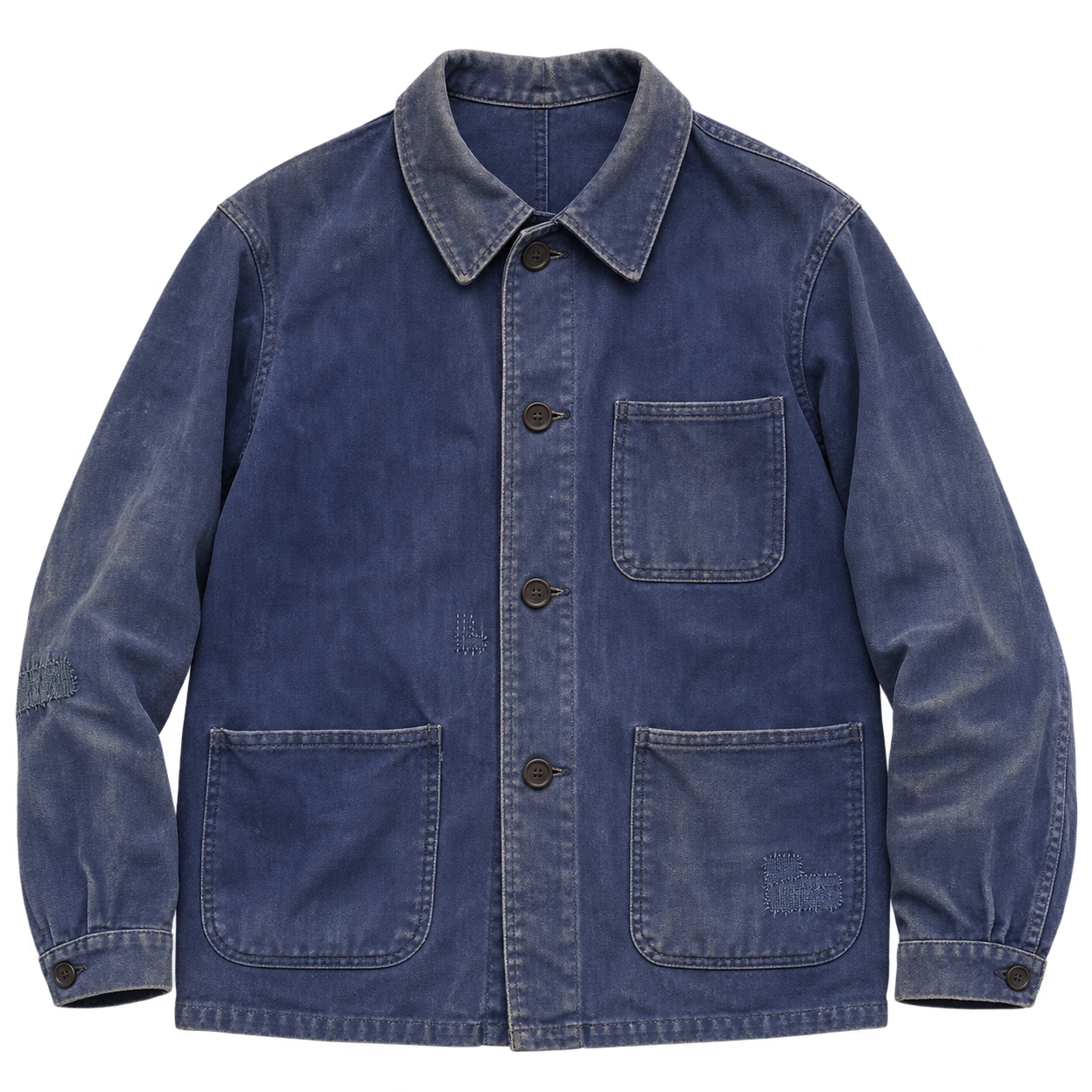
Vintage faded blue French bleu de travail chore jacketView product + listings →

The European work layer

French Workwear

Bleu de Travail Chore Jacket

The French chore jacket is the opposite of the M-65. There is no hidden hood, removable liner, or field system—just an unlined blue jacket with a button front and three patch pockets. That reduction is what makes it adaptable. It can sit over a T-shirt like a shirt or replace a tailored jacket without pretending to be one.

The best examples are usually cotton moleskin or twill with fading concentrated at the collar, cuffs, placket, and pocket edges. Repairs belong here when they follow actual use. Perfectly distributed distressing and decorative patches are more likely to be someone else's idea of workwear.

French sizing and decades of shrinkage make the label unreliable. Ask for the chest, shoulder, sleeve, and back length. I would rather buy a less collectible jacket with the right square proportion than a rare label with narrow shoulders and sleeves that end in the wrong place.

$80–$3001940s–1970s
View ProductSearch Listings

The trouser before the trend

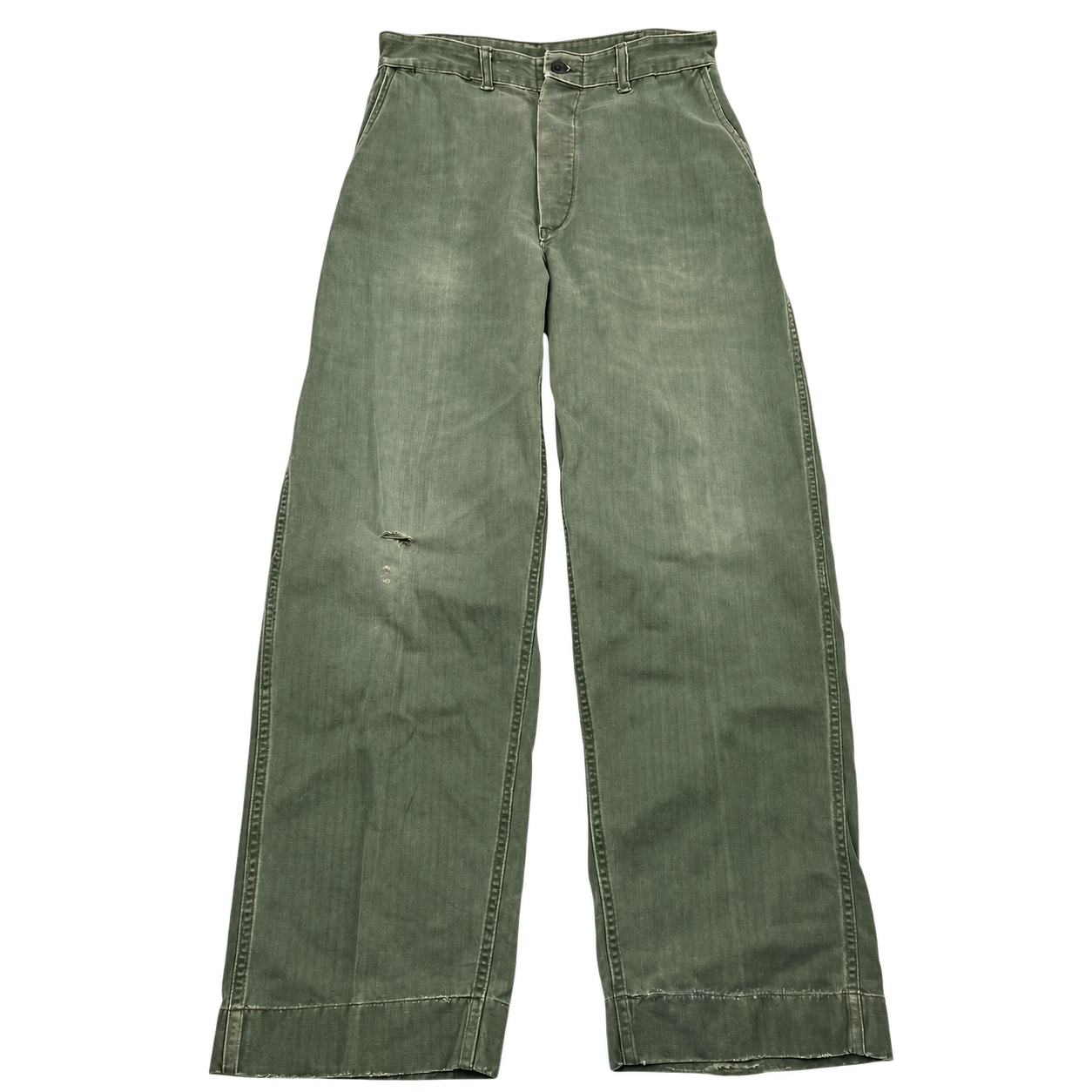
OG-107 utility trousers already contain the high rise, straight leg, and washed olive color that modern fatigue pants spend years trying to reproduce.

Vintage faded olive U.S. military OG-107 utility trousersView product + listings →

The fatigue reference

U.S. Military

OG-107 Utility Trousers

OG-107 is a color designation, but in menswear it has become shorthand for an entire idea: cotton utility clothing in a dull olive green that gets better as it loses color. The U.S. Army used olive green utility uniforms for decades, and surviving trousers now range from nearly new dark green to pale, repaired examples that barely resemble the shade in which they started.

The appeal is proportion as much as history. A higher rise and uncomplicated leg make the trousers work with tucked shirts, short jackets, and heavier shoes without looking styled around any one of them. The fabric and construction are plain enough that fading, repairs, and the previous owner become the decoration.

Look for interior markings or a contract label, straightforward military construction, and an honest surface. Then ignore the tagged size until you see the actual waist, rise, inseam, and hem width. A beautiful pair that fits like the wrong decade is still the wrong pair.

$60–$1801950s–1970s
View ProductSearch Listings

When the fabric does the work

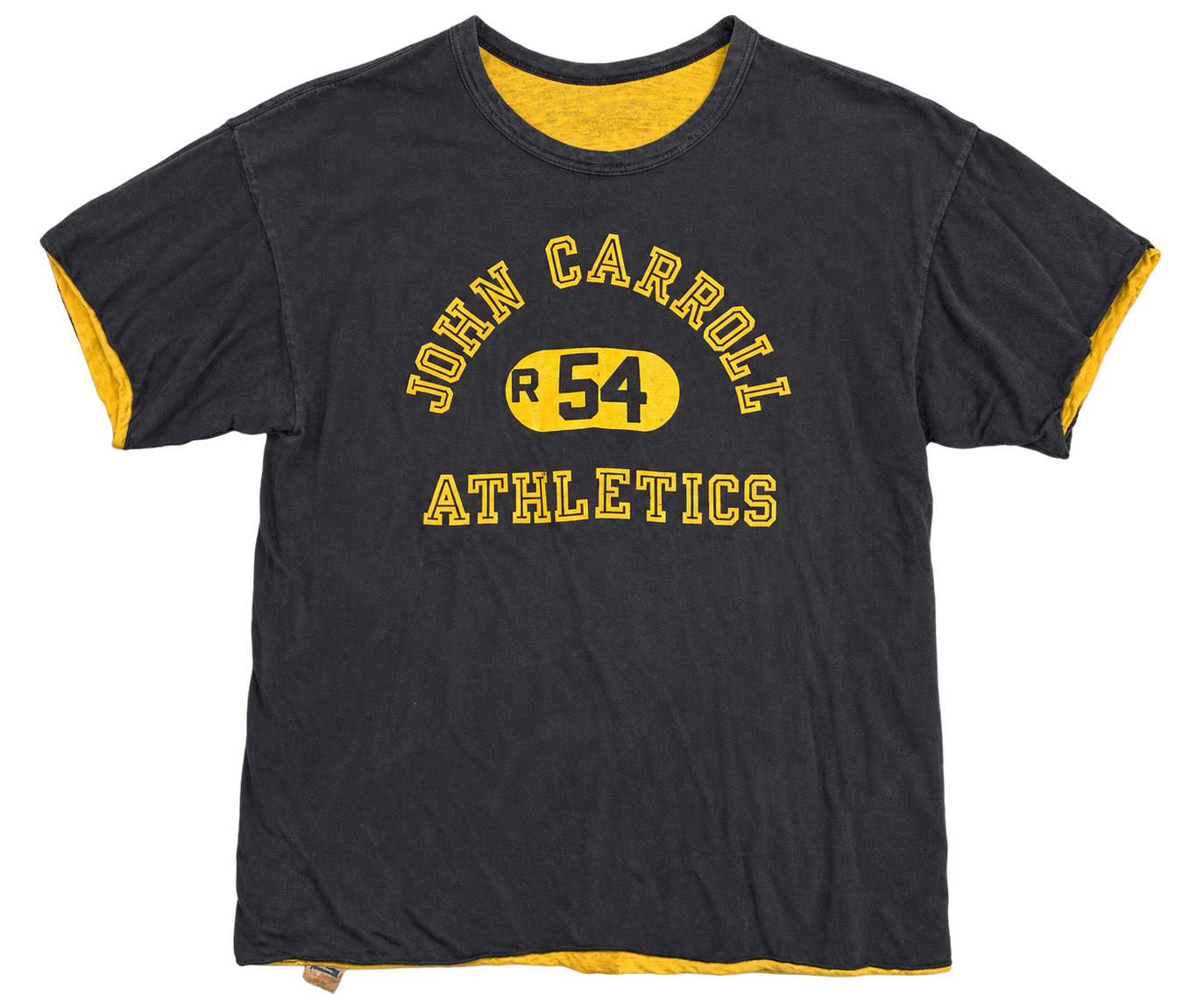
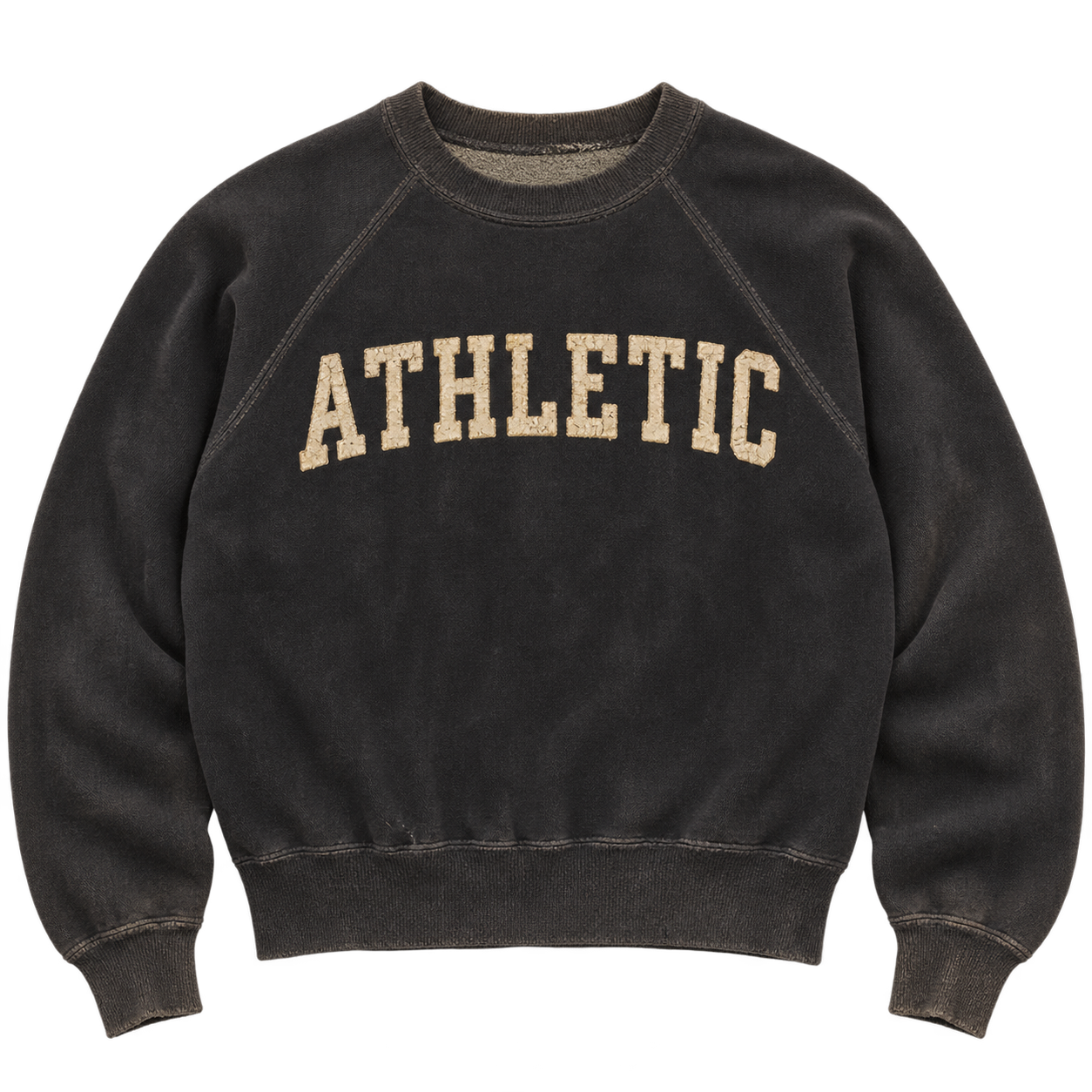
A built-in layer, an irregular yarn, and raised flock lettering show three different ways an ordinary athletic basic becomes specific.

Vintage charcoal and yellow two-ply reversible short-sleeve T-shirtView product + listings →

The built-in layer

Vintage

Double-Layer T-Shirt

The double-layer T-shirt is two complete short-sleeve shirts sewn together, often in contrasting colors and sometimes intended to be reversible. The inner layer appears at the collar, sleeve openings, and hem, giving a basic athletic tee more weight and a built-in outline.

The good versions feel substantial without behaving like a sweatshirt. Both cotton layers should have softened together, while the slight misalignment between their hems and sleeves makes the construction visible. A collegiate or athletic graphic fits the idea, but the doubled fabric is the actual feature.

Check inside the body to confirm there are two full layers rather than contrast binding or a second fabric panel. Look for compatible fading across both shirts, inspect the joining seams, and ask for chest and length measurements—the added fabric can make an already boxy vintage tee fit smaller than expected.

$40–$1501990s–2000s
View ProductSearch Listings
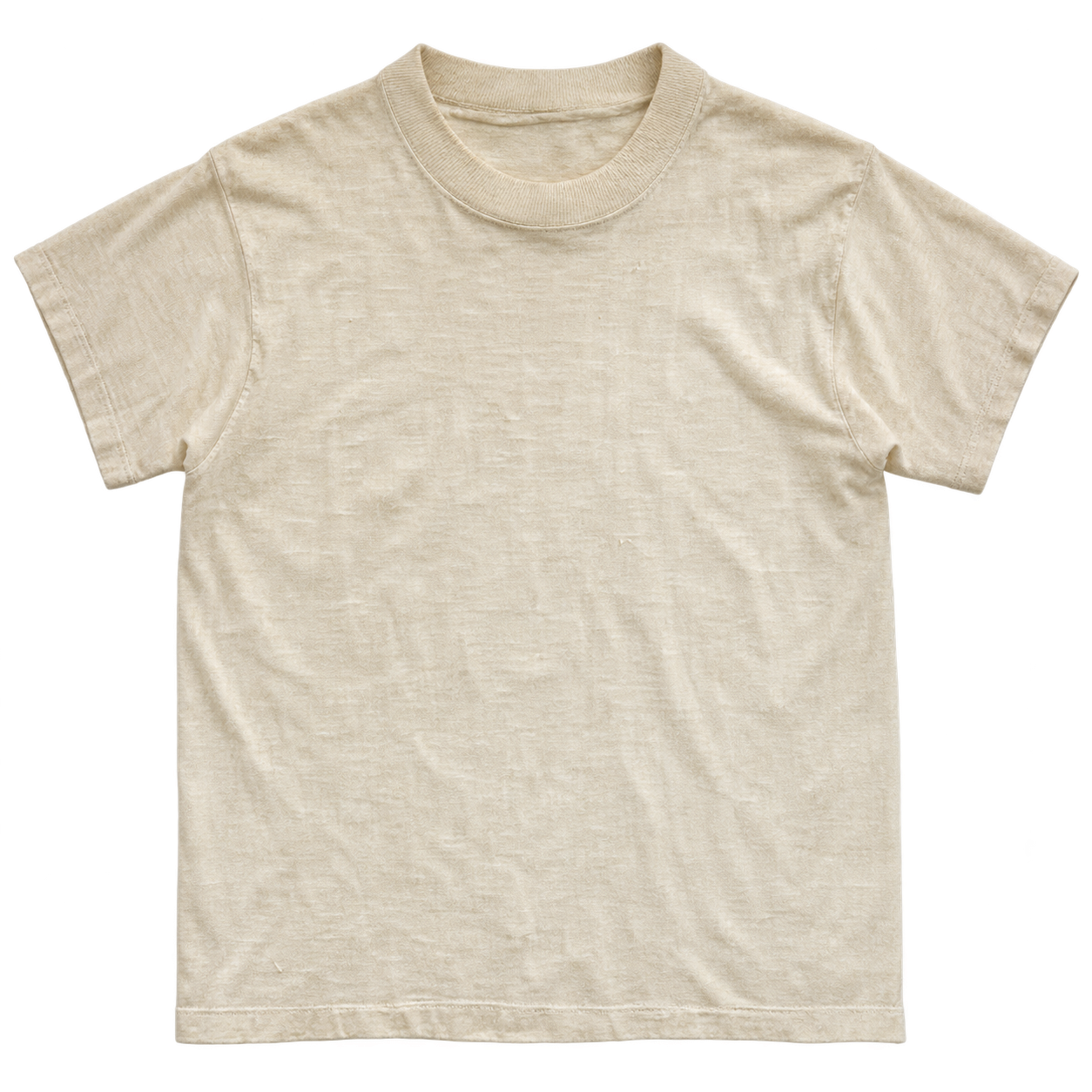
Vintage off-white slub cotton crewneck T-shirtView product + listings →

The textured blank

Vintage

Slub Cotton T-Shirt

A slub tee makes the case for a blank shirt. Uneven yarn creates small shifts in thickness across the surface, so washing and wear produce depth without a graphic. The fabric looks imperfect before anyone tries to distress it.

The details should stay quiet: a substantial collar, a tubular or simply constructed body, and proportions that feel square rather than long and narrow. Single-stitch hems can support an older date, but they are one clue—not a certificate of age or quality.

Hold the listing photo close enough to separate actual yarn texture from stains, pilling, or a modern printed effect. Then buy from the chest and length. A vintage blank only works if the neckline and proportion still carry the shirt.

$30–$1201950s–1970s
View ProductSearch Listings
Vintage faded black raglan sweatshirt with cream flock letteringView product + listings →

The raised graphic

Vintage Athletic

Black Flock-Print Sweatshirt

Flock printing uses raised fibers to give lettering a velvet-like surface. On an early black athletic sweatshirt, the print ages at a different speed from the cotton body: the black fades, the flock flattens and breaks, and the graphic becomes physical texture instead of a clean layer of ink.

The sweatshirt underneath matters as much as the lettering. Look for raglan sleeves, a short body, dense ribbing, and flat seams appropriate to the period. College, fraternity, team, and local-organization graphics are common reference points, but an interesting name does not rescue a stretched collar or destroyed waistband.

Older sweatshirts often fit much shorter than their width suggests. Get the chest, back length, sleeve from the neck, cuff width, and waistband measurement. Examine the flock closely for new work, glue, or repairs that do not share the wear of the surrounding garment.

$120–$3001950s–1960s
View ProductSearch Listings

Learn the shape, then forget the mythology

Vintage becomes exhausting when every purchase is treated like an exam. Dates, contract numbers, zipper manufacturers, tags, and stitching details matter when they explain what you are buying. They matter less when they become a way to turn ordinary clothes into artificial scarcity.

The advantage of these six pieces is that none requires perfection. An M-65 can lose a liner. A chore jacket and OG-107 trousers can carry repairs. A double-layer tee can be faded and anonymous. A slub tee or flock sweatshirt can show its age directly on the surface. Condition should change the price, but wear is often the reason the piece looks better than a reproduction in the first place.

Start with measurements, construction, and whether the proportion works on you. Then learn enough about the label to avoid buying a fantasy. The goal is not to own the most collectible example. It is to find the version that makes the copied one unnecessary.

The best vintage reference is the one you stop treating like an artifact and start wearing like clothing.

Keep reading

The next issue, when it's ready.